“You forgot about the Beaver”: Indigenous Salmon Solutions and the Culture Behind Them
The decline in salmon populations in British Columbia has impacted indigenous communities immensely. Salmon play an integral role in indigenous ways of life and culture, and their absence has not only affected indigenous diets but also their very identity and way of life. Elder Carl Mcleod and Arnie Narcisse were generous enough to share their knowledge and experiences with salmon loss with us in an interview, and shared how we as a community can work to save the salmon.
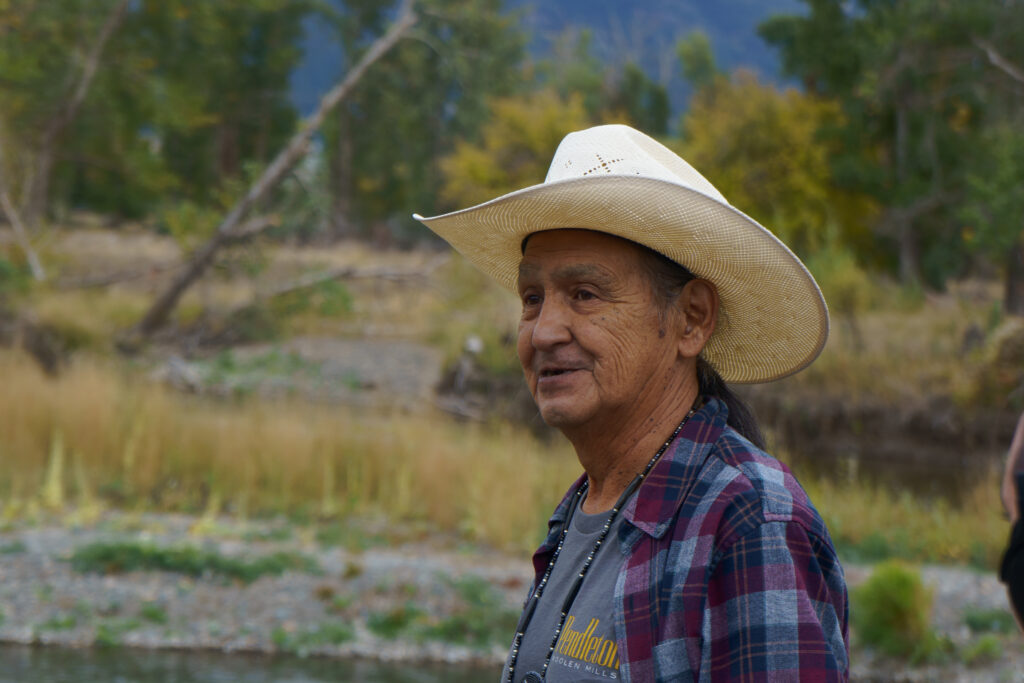
Carl Mcleod at the Coldwater river, Merritt, BC. (Senna Rock- Thompson Rivers University)
For Arnie and Carl, the fate of the salmon is directly tied to the continuation of indigenous practices in their culture and represents a broader view of indigenous life in Canada.
“Without an actual living salmon, our rights are just something in a book,” says Arnie, “the problem needs to be brought out into the general public.”
Indigenous fishing practices are suffering due to the steep decline in their populations, but we travelled with Carl to the Nicola and Coldwater rivers in Merritt to explore the possible solutions and examine what is being done to bring the salmon back. At Coldwater River, Carl showed us a fish ladder built to emulate a “man-made beaver dam”, which is to aid the river in becoming both deeper and colder, while monitoring the fish to determine the state of their current numbers. “We don’t want no cement dams,” says Carl, “we’d rather have Mother Nature do it, the beaver has engineering on how to fix these dams without harming the river”. Natural solutions are at the forefront of indigenous efforts; nature requires harmony and balance, and therefore, emulating natural dams like the beaver is the least invasive and most familiar course of action.
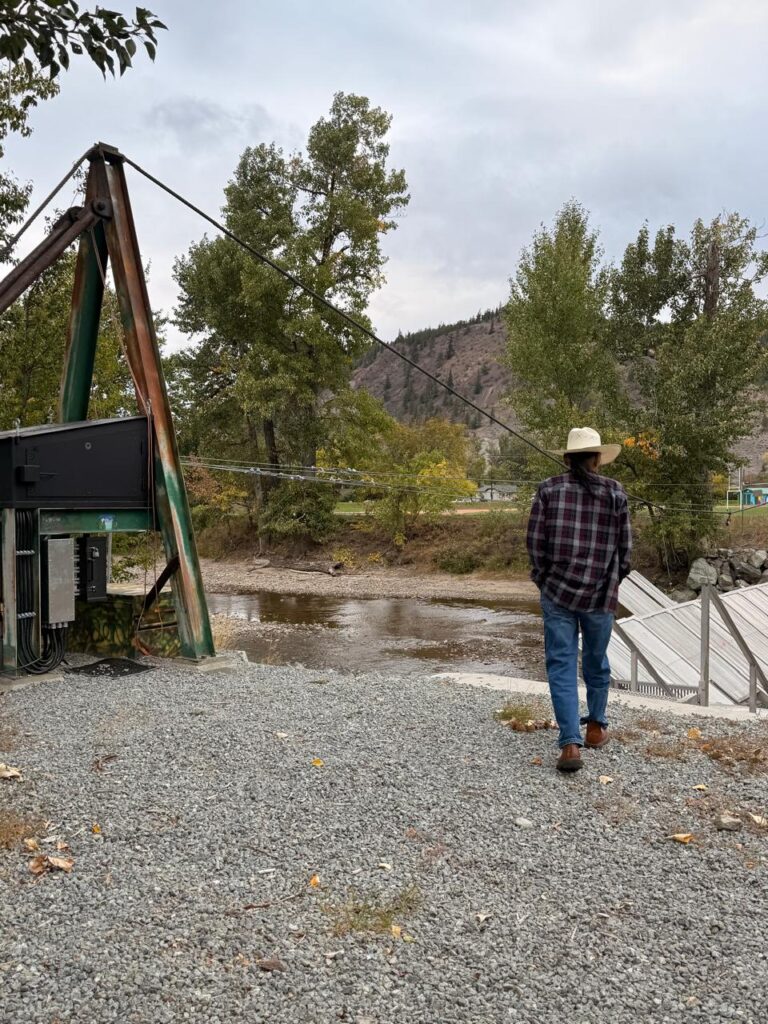
Carl Mcleod at the Nicola Fish Fence, Merritt, BC. (Mehak Gaurr- Thompson Rivers University)
Both Carl and Arnie stress that this fight to bring the salmon back is one that will have to carry on to the next generation, which is why it is so important for the indigenous culture surrounding Salmon to be passed down, so that the younger generations understand just how important salmon is, not only to an ecosystem but to the continuation of a indigenous practices that are now in danger. For Arnie, no salmon means “we couldn’t go fishing where they used to go fishing, we couldn’t practice their spirituality where they used to”. Arnie’s childhood was filled with memories of fishing, of learning to respect the salmon and the role it played in their lives as sustenance.
Arnie worries that future generations have been deprived of these experiences, “I don’t ever want my grandchildren to say ‘oh ya I remember my papa used to talk about that’ I never want to see that day happen, if it wasn’t for the salmon, I wouldn’t be here, my people would have starved to death”. As an elder, Carl is known as the knowledge keeper of the water. He and Arnie have both dedicated their lives to salmon, and they understand better than most the importance of bringing the salmon back, Carl says;
“I’m doing all I can, with whatever I have left, to make sure these salmon survive. We want the younger generations to carry on the battle.”
And so for Arnie and Carl, the loss of salmon is significant. While efforts such as environmental mindedness, fish ladders, habitat protection, and continued cultural teachings are lending themselves to salmon solutions, it will be up to younger generations to not only carry these on but also adopt new tactics. However, the most important tool in regards to the salmon decline is to expand the message and get people to care enough to engage in the efforts needed. The continuation of indigenous salmon practices relies on the generational teachings that Arnie and Carl wish to pass on. Similarly, salmon populations rely on the public’s understanding of both the importance of salmon as a part of the ecosystem and as a larger representation of human relationships with the environment around them. Just as nature has nurtured us in generations past, so too must we nurture nature.

Leave a Reply